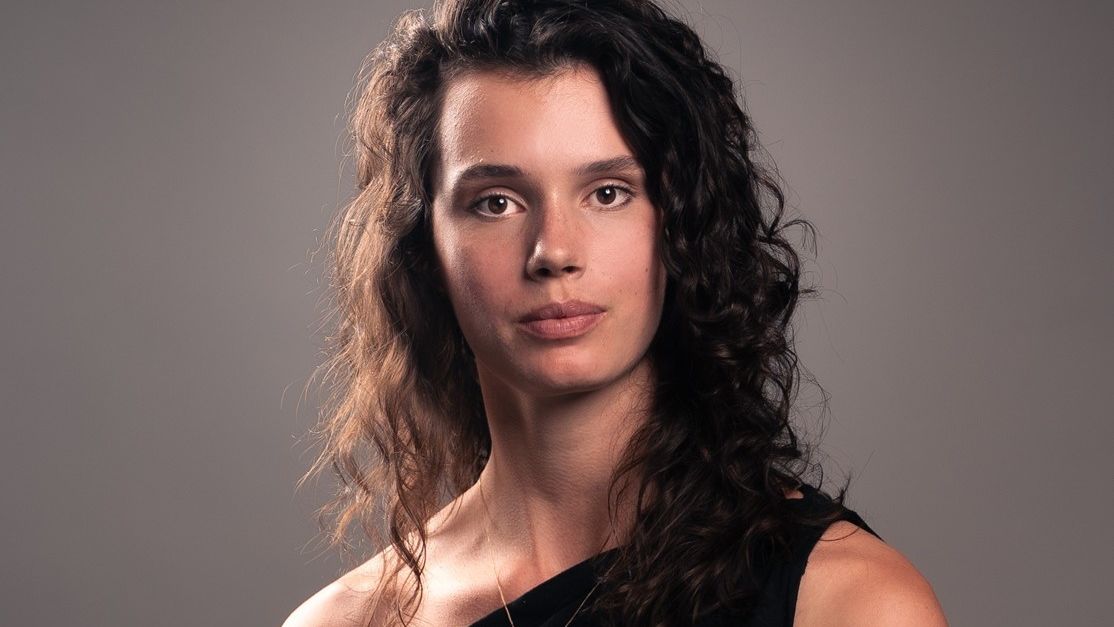
Meet Kathleen Lott 2026 Ballet Piano Fellowship recipient: Feodora Zu Hohenlohe
What is your very first memory of the piano?
My earliest memories are those of my first piano lessons. My sister and I began lessons together and we both fell in love with music, although we pursued different instruments.
At what point did you realise music was going to be your lifelong pursuit?
I have always been serious about piano and knew that music would become my profession, but there have been many moments of doubt. The career of a professional musician although rewarding, is often uncertain, however I could not imagine my life without it.
Where did you receive your formal training? Were you classically trained?
I have studied with teachers in Europe and Australia and received my Bachelor of Music, majoring in classical piano performance, at the University of Queensland.
Do you have any personal experiences with dance—even as a hobby—or is your background purely focused on instrumental performance?
One of my most memorable experiences was seeing The Sleeping Beauty in Munich as a child. I was so captivated by the performance that I immediately attended a ballet class. While I did not pursue dance, today I enjoy spending time dancing with friends to live music.
What originally attracted you to the niche world of playing for a ballet studio rather than focusing solely on solo performance or accompanying vocalists?
I have always enjoyed playing and performing in a collaborative context. I was intrigued by the multidisciplinary quality of ballet piano especially after hearing about the opportunity of working with Queensland Ballet from our Head of Music, Roger Cui.
What does a typical day look like for a ballet pianist?
I arrive at the Thomas Dixon Centre around 9.15am to warm up and practice before the day starts. At 10am I play for ballet class, followed by rehearsals until lunch at 1.45pm. Rehearsals resume at 2.45pm and continue until 6pm. If the schedule includes ballets currently being rehearsed to recorded music, it allows the pianist time to work on scores for upcoming productions.
If a teacher asks for an improvised combination that requires "more breath at the top of the movement" or a "shorter, sharper accent," how do you translate those physical commands into chords and timing on the fly?
A lot can be done with articulation, time, upbeats, syncopation and the sustain pedal to meld pieces of music to suit different combinations of steps. It is easiest to create space with time, however if I can’t use time to create space due to the nature of the exercise, upbeats can create breath and the illusion of space (for allegro jump for instance).
Congratulations on receiving the fellowship. What was your reaction when you found out?
I was absolutely thrilled! At the time I had already been playing for the pre-professional ballet classes and rehearsals and was eager to get more involved with the company.
What does this fellowship mean to you personally and professionally?
Professionally, the Fellowship presented an exciting and unique opportunity to develop the specialised skills required to become a fully-fledged ballet pianist. I feel very fortunate to be working and training in such a dynamic environment in the arts industry.
Personally, I really enjoy the collaborative nature of the work. The Fellowship has provided me with invaluable learning experiences, that have helped shape and develop my artistic identity.
What opportunities will the fellowship provide that might not otherwise have been possible?
The Fellowship has provided me with the opportunity to train and work within a vibrant ballet company, collaborating with highly accomplished artists, ensembles and orchestras. There are currently no tertiary training pathways in Australia for ballet pianists, and the Kathleen Lott Ballet Piano Fellowship plays a vital role in helping young pianists gain hands-on experience, learn from industry professionals and develop the expertise needed for this rewarding career.
How do you think the experience will influence your work at Queensland Ballet?
The company feels like a family. I am grateful to everyone who has generously shared their knowledge and experience with me, and I feel very lucky to be in an environment that fosters growth and supports emerging artists.
Can you describe your musical personality? What genres or eras of music do you feel you naturally lean in to?
It’s difficult to say, and it changes with time. However, I am currently enjoying impressionistic music, some light jazz and lyrical pop.
Outside of playing the piano, what arts inspire you and enrich your daily playing? Theatre, visual arts, or literature
I enjoy enriching my artistic understanding through a wide range of multimedia and interdisciplinary art forms. However, I feel most inspired by listening to live performances (orchestral, art song, chamber music, opera, ballet, pop music gigs).
What keeps you inspired after so many years at the piano?
Music has always been a part of my life. It is an essential part of who I am and a way to express and experience the world around me. Art enriches the human experience and the depth of emotion I can convey through playing is a very integral and important part of the way I live. It continues to challenge, inspire and sustain me, both personally and professionally.
If you could accompany any ballet, choreographer or dancer from history, who would it be and why?
Romeo and Juliet and The Sleeping Beauty are two ballets I would love to learn and play for rehearsals. They are classics and staple repertoire for a reason!
What do audiences perhaps not realise about the contribution of pianists to a ballet company?
Aside from playing for ballet class and rehearsals, ballet pianists play a key role in bridging the gap between how choreographers/dancers and performing musicians interpret the music. The pianists are often the first to mark choreography in the score as the ballet is being created or learnt. The pianist will then pass the score on to the conductor/ensemble when they join rehearsals closer to the performance date.
What advice would you give to young musicians interested in working in dance?
There are a lot of online resources that were very helpful to me when I began playing for Queensland Ballet. Some practical steps could include: watching recorded world ballet day classes on YouTube, studying free or paid courses provided by ballet pianists online, observing/playing ballet classes at small ballet studios or community classes and reaching out to ballet pianists in their city to observe their class playing.
What is your process for learning a new piece of music? Do you learn the melody or chords first? Or both at the same time?
Strong sight-reading skills are essential to any repetiteur role, especially when required to learn a score quickly. I start by sight-reading through a score, focusing on the outermost parts (melody and harmonic support) in dense textures or difficult passages.
How do you mentally and musically shift your approach when moving from class to rehearsals?
Playing for class and playing for rehearsals feel very similar to me. Listening to orchestral recordings of the excerpts that will be taught in the rehearsal is a helpful strategy to solidify tempo and textural changes before I play.
Can you share an instance where you had to prioritise strict rhythmic discipline over your own artistic or expressive inclinations to support the production?
This happens quite often! What I might intuitively and musically want to do will differ from what is required for the choreography. As musicians, we must be very adaptable to support and facilitate the steps, however there are little ways in which we find freedom and expression. Time is only one of many expressive devices.
Rehearsing major productions requires playing complex orchestral score reductions. How do you approach mastering a dense orchestral score? (such as Messa da Requiem ensure the dancers still hear the necessary rhythmic cues they would get from a full orchestra?)
The scores for ballets such as Messa da Requiem are hundreds of pages long! Having a strong foundation in classical training is essential for playing rehearsals and becoming a well-rounded ballet pianist. After building a basic understanding of the work and being able to play the skeletal structure of the score, I use time in between rehearsals to practice and fill in the denser textures. Playing for rehearsals also helps break down the work into smaller more manageable sections, which gradually get pieced together as the dancers become more familiar with the choreography. Listening to orchestral recordings is also very helpful in building an understanding of what parts the dancers need to hear most strongly in different passages.
During rapid-fire company rehearsals you may be asked to jump to very specific bars or motifs on a whim. What do you / use to maintain absolute focus and agility under high-pressure, fast-paced rehearsal conditions?
As ballet pianists, we sit quietly behind the piano in a corner of the studio, however we are constantly observing everything happening in the room. We need to be ready to jump to any section the score at a moment’s notice according to the needs of rehearsal director. Watching video recordings of the ballet and marking choreographic cues on the score, is therefore an important part of the job in becoming intimately familiar with the choreography. Every pianist has slight variations in their shorthand notation of the choreography and we use lots of pictograms and little notes that help us find our place quickly.
After spending so much time in rehearsal rooms, do you ever find yourself watching ballet differently from audiences?
I definitely do! Watching the audience’s reaction and understanding how someone perceives the work, seeing it for the first time is incredibly rewarding. It is such a beautiful experience to be part of the rehearsal process from the start to the finish of a season.