In Conversation with Leo Mujić, Choreographer of Hamlet
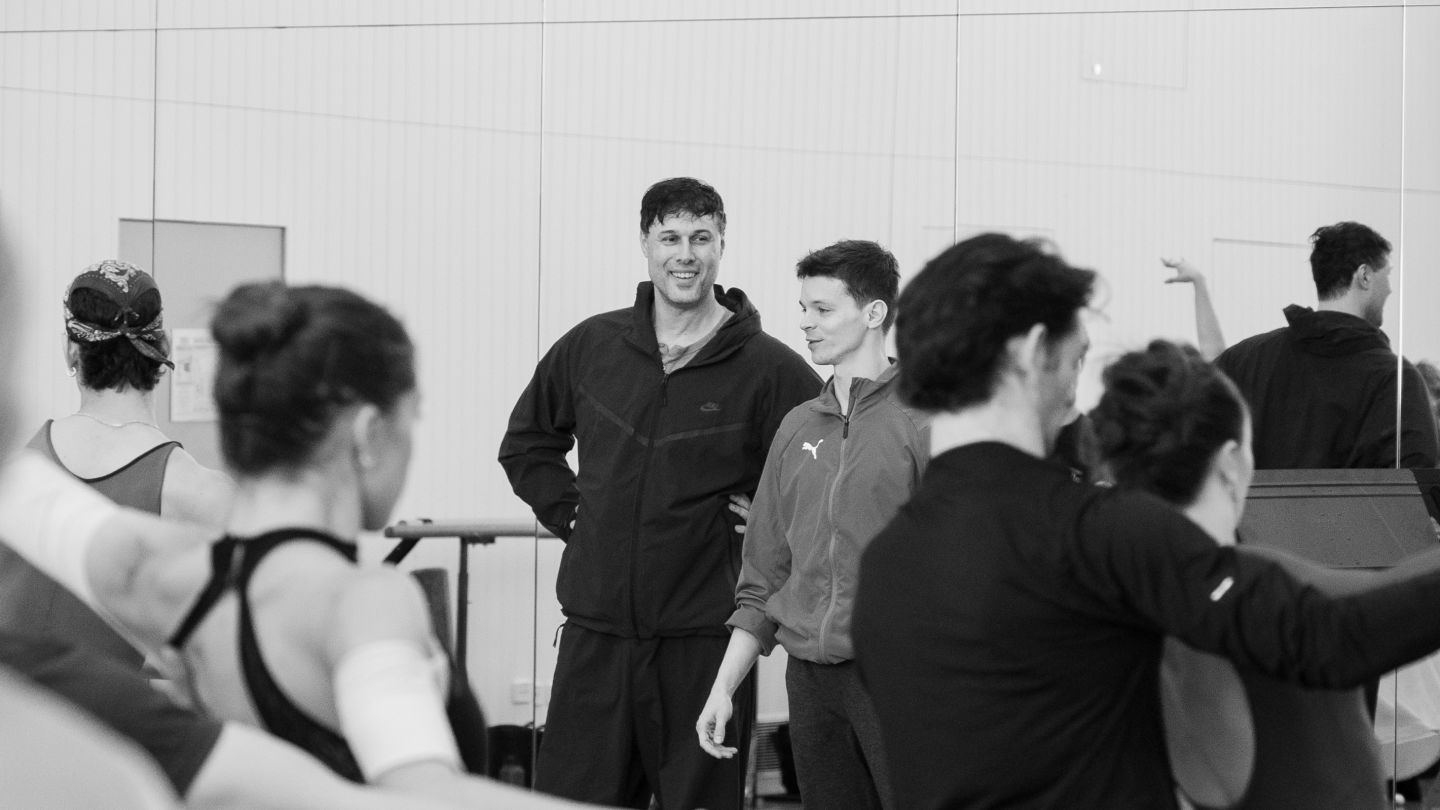
If you had to describe Hamlet in three words, what would they be?
Sensitive, revengeful and regretful.
What inspired you to translate Shakespeare’s Hamlet into a ballet?
The eternity of it fascinates me. Shakespeare wrote these words more than 400 years ago, and they still remain relevant because they explore human nature. While we’ve learnt how to fly, extended our lives, and transformed how we live; what drives, defines and destroys us has not fundamentally changed. I think Mr. Shakespeare understood this perfectly. He hit the spot.
You cannot ignore the fact that there are countless interpretations of Hamlet that already exist. In Western society, we are brought up with Hamlet. It’s taught in schools, even in countries where English is not the key language where I grew up. But these works form the foundation of our culture, theatre and artistic history. They are there for prosperity and should not be ignored. I think our responsibility as contemporary artists is to bring them forward for new audiences without reinventing it beyond recognition.
The quality and atmosphere of Shakespeare’s words allowed me to transform this story into a performance without words. And perhaps their greatest strength is that they sometimes resonate most powerfully when they are not spoken.
This production is not about claiming there is only one interpretation, or one choreographer who matters. I am inspired by many forms of storytelling including films, plays and TV series. Ballet as a means of communication is just one part of that wider conversation.
How do you go about bringing such an iconic text to life through movement?
Music is essential. I use the music of Tchaikovsky and Camille Saint-Saëns because I am in the service of the great people who came before me. I try to transform their art into something physical, something moving, alive, and unfolding on the stage. When choosing the music, it has to feel as though it was written for this piece. Of course it isn’t, I cannot call Mr. Pyotr Ilyich Tchaikovsky to ask him for a few more notes here or there, so I must take it for what it is, and spread my story through it. I try to create harmony between the audio and visual experience.
Choreography, in its simplest sense, is the organisation of time and space. Space is determined by the theatre and the architecture around you, while time is set by the music. You must listen to the tempos, silences and dynamics of the music closely to shape the story.
I don't do this alone. The musical structure was developed closely with my assistant, Dramaturg Bálint Rauscher. We spend more time listening to music than anything else in the creative process.
For me, creating the steps is easy. The steps themselves are not important. They are motion; technically precise, dynamically phrased, but not literal. I want the movement to tell the story and avoid gesture as much as possible.
Hamlet is a very long play. My responsibility is to honour it while asking what translates best into ballet. You cannot stage thousands of conversations between Ophelia and Hamlet. Instead, you distil their relationship into one or two pas de deux, maintaining a clear, continuous narrative.
How did you translate Hamlet’s internal conflict including his torment and duality?
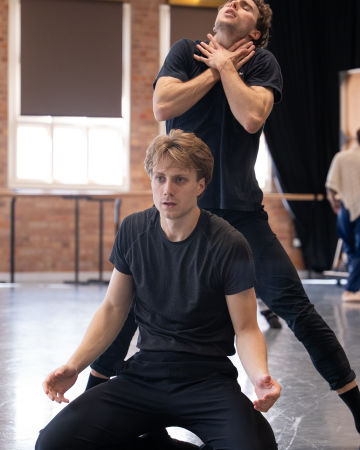
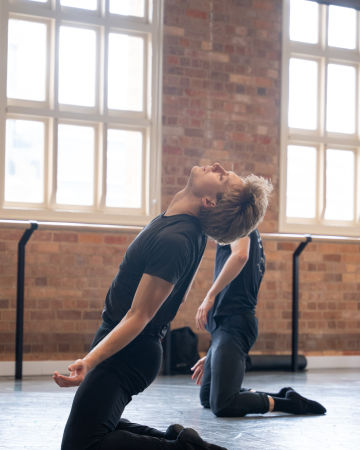
Movement can express this more powerfully than anything else. A dancer can move slowly, remain completely still, or shift into aggression or extreme speed; each of these reveal emotional and psychological states.
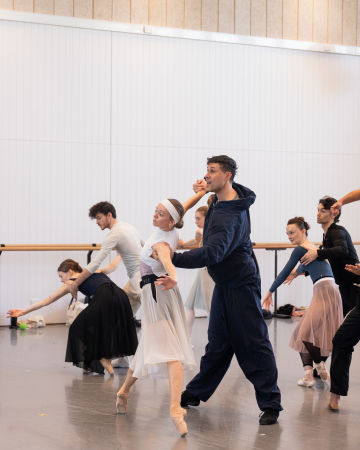
In my production, Hamlet’s inner world is embodied by a large group of masked dancers. They represent his thoughts or what we call his “spirits” and are connected to his ancestors. At times they guide and support him, at others, they become his army, his enemies, and ultimately his doom.
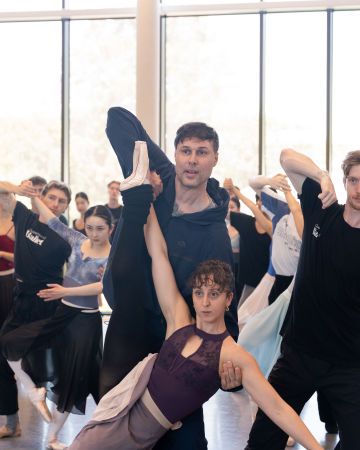
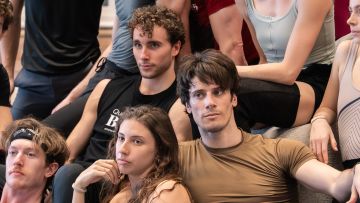
This work relies on a high-calibre classical ballet company like Queensland Ballet. Hamlet has a distinct movement vocabulary that evolves for each character, with every role speaking through it’s own physical language. Every movement is in a service of what William Shakespeare wrote, and I try to remove myself and simply follow what the character is saying.
I also try to avoid making characters black and white. I don't believe anyone is entirely bad and totally good. Every character is changing constantly, and only fully revealed through their relationships with others.
What was the inspiration behind the set design, and how does it support the storytelling?
The set design has a strong Gothic atmosphere, but what I like most is its lightness. It uses natural materials to create a sense of representation, while carrying something slightly retro; an old-world theatre feeling meeting something new.
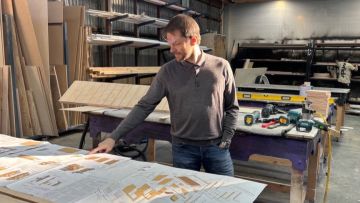
My production is inspired by traditional Shakespearean theatres, like the Swan Theatre in Stratford-upon-Avon, with their wooden structures. The stage design, by Stefano Katunar, draws from this influence. It is intentionally light and open, giving dancers complete freedom of movement. Ultimately, they take over the space entirely, becoming the living sculptures and the living stage design.
What do you hope Australian audiences will take away from this production?
Audiences deserve to experience Hamlet fully and I’ve travelled from Europe to bring my interpretation of a story audiences already know. My responsibility is not to tell the audiences what to feel, but to create the conditions for feeling and build an atmosphere in which they can experience the Gothic, contemporary, medieval madness of Northern Europe for themselves.
When the audience leaves the theatre, it is my hope that the work hits somewhere – in the brain, the stomach, the heart.
People come to the theatre for many different reasons. Theatre is no longer only for the culturally educated; we are making art for everybody. Hamlet is a title everyone should be able to engage with. If someone who has never been to the theatre decides to come back again, I think we’ve done our job. That is the person we make theatre for.