In Conversation with Christian Spuck Choreographer, Messa da Requiem
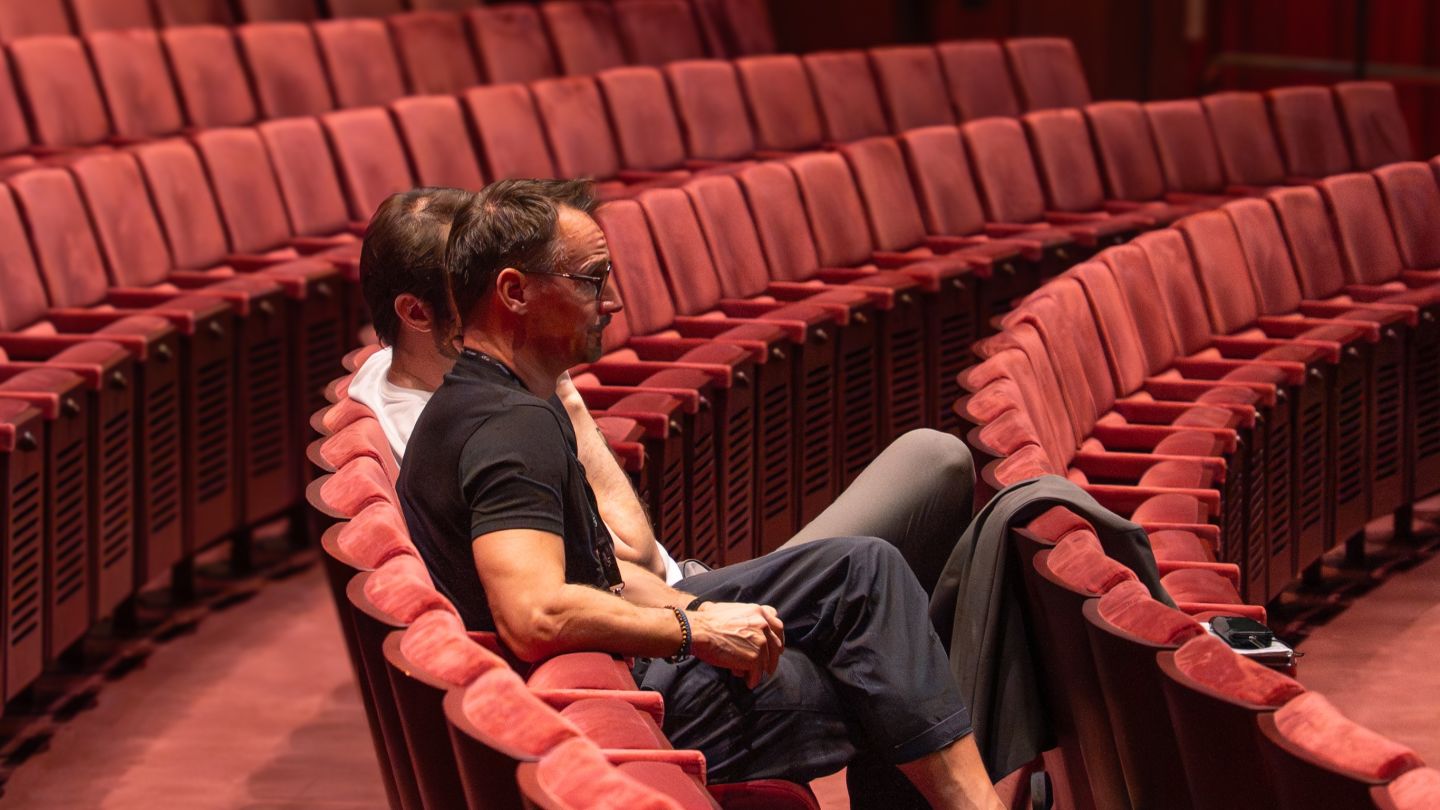
Christian Spuck is the Artistic Director and Choreographer for Staatsballet, Berlin, the largest ballet company in Germany. Renowned and celebrated across the globe for his innovative choreographic and storytelling skills, Spuck joined us to discuss his journey as an artist and his inspiration for Messa da Requiem.
Describe Messa da Requiem in three words:
Describing Messa da Requiem in three words is very difficult!
I think, one word would be powerful because it unites a huge choir, beautiful music, a large cast of dancers creating striking and expansive tableaus on stage.
The second word universal as it speaks to deep human themes, exploring death, loss, but it's also about hope and completely independent of any religion or narrative.
The third word would be poetic, because this production leaves space for association, for emotions, for the artists on stage, but also for the audience. I believe that every dancer, artist, choir, singer, musician, conductor will find their own voice in this production. And that's something I really appreciate.
Do you expect a different response and interpretation by Australian dancers and audiences?
I don’t think it matters if you're from Australia, from Europe or from Asia, this music which is so strong and so universal will touch everyone. That is something very wonderful and very beautiful.
Can you describe the qualities, structure and emotional tone of the choreography in Messa da Requiem?
The choreography and methods are based on classical ballet. The ballerinas are in pointe shoes, and I’m utilising basic classical technique with influences from contemporary dance.
I feel sure that we will alter the production here, with all the new artists who bring their feelings and thoughts and experience to this work.
The structure and the emotions are led and set by the music and the singers. The idea behind it is to make those emotions visible on stage so that maybe you understand the music even more fully. The idea is that you can see with your ears and you can hear with your eyes.
The score by Giuseppe Verdi is complete on its own, and is most often experienced in the concert hall. It is rare to hear it performed in the orchestra pit while more than 140 performers fill the stage with movement and powerful imagery. That combination makes the experience truly special and I hope the emotional impact of the music becomes even stronger.
Are there any moments in this production still gives you goosebumps?
There are two moments in the music which are incredibly beautiful to me. I still remember hearing it for the first time, at just 16 years old, I didn't even know it was Verdi’s Requiem. One section, the Lacrimosa, is about crying and grieving, and even now it gives me goosebumps because I find it so touching: you almost hear the tears falling, yet at the same time there is great warm and tenderness.. I find it profoundly beautiful.
And the second movement in the Messa da Requiem in the part of Offertorio where you have a short section of four principal singers singing acapella, completely alone. It is strong and so beautiful that I decided that in this moment, everyone must stay still. It's just those four voices which I find it incredibly touching.
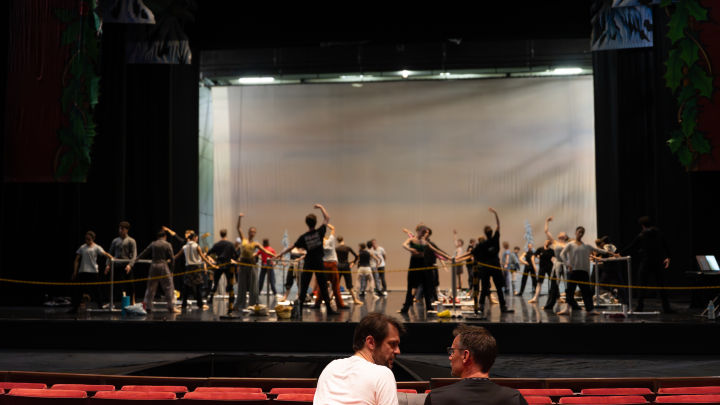
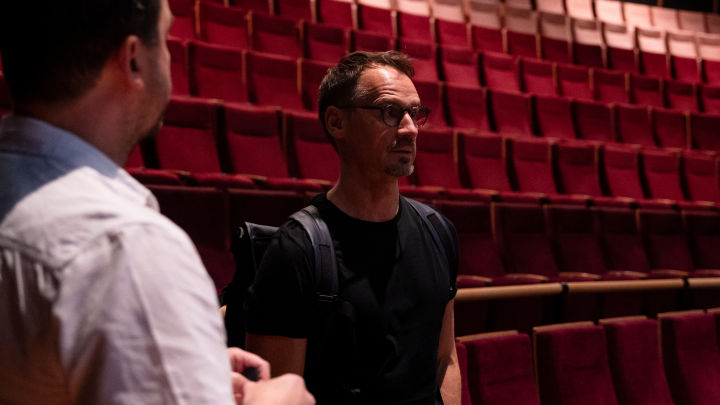
Combining singers and dancers on the stage and having them move as one is quite unusual. Was that a deliberate choreographic choice, and in your words can you share with us what makes Messa da Requiem unique?
When I've been invited or asked to choreograph Messa da Requiem, it was immediately clear to me that the singers needed to be on stage alongside the dancers. They could easily have been in the orchestra pit, and the dancers would just be dancing to the score. But, the meeting of two different artforms on stage, dancing and singing is truly special.
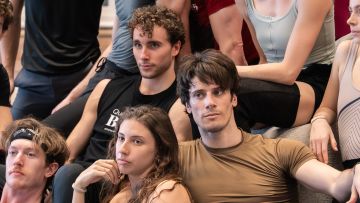
During the rehearsal process the singers and the dancers began to inspire each other creating moments of deep emotion, particularly at the top of the score when the choir sings very quietly. the music seems to come out of nowhere. In our first rehearsal of this section , the dancers were deeply moved, and that in turn, affected the singers. When the singers were due to go on their break, they chose instead to stay in the studio and watch the dancers rehearse. That moment was wonderful because it brought people together, artists who normally only work in their own discipline, into a shared creative experience.
What do you hope the audience carries with them after experiencing this epic work?
And I think this is something what is a wonderful on culture, because culture is really bringing people together. We experience something together and it gives us emotions together in one room. And that's something wonderful because at the moment in the world, everything is about getting apart and deciding who is right and who's wrong and which way we should go. And that's why I love culture and art, because it brings us together and we can experience something about us and we can share something. And I think that's wonderful.
I think this is what is so wonderful about culture is that brings people together. We experience something collectively, sharing emotions in the same room at the same time. That feels especially meaningful now, when so much of the world is focused on division, who is right or wrong, and which way we should go.
This is why I love culture and art. They unite us, allow us to experience something about ourselves, and give us something to share.
I hope the audience walks away having experienced something they have never seen before, that emotionally moves them and offers a sense of peace. I hope the pictures, the music, the movement stays with them for a long time and they leave with a sense of calm which lingers long after the performance.
Messa da Requiem is running from the 27th March to the 4th April at the new Glasshouse Theatre, QPAC.
Messa da Requiem is presented by Queensland Ballet in association with QPAC, and generous support from the Messa da Requiem Giving Circle.