Behind the Seams with Hamlet Costume Designer, Manuela Paladin Šabanović
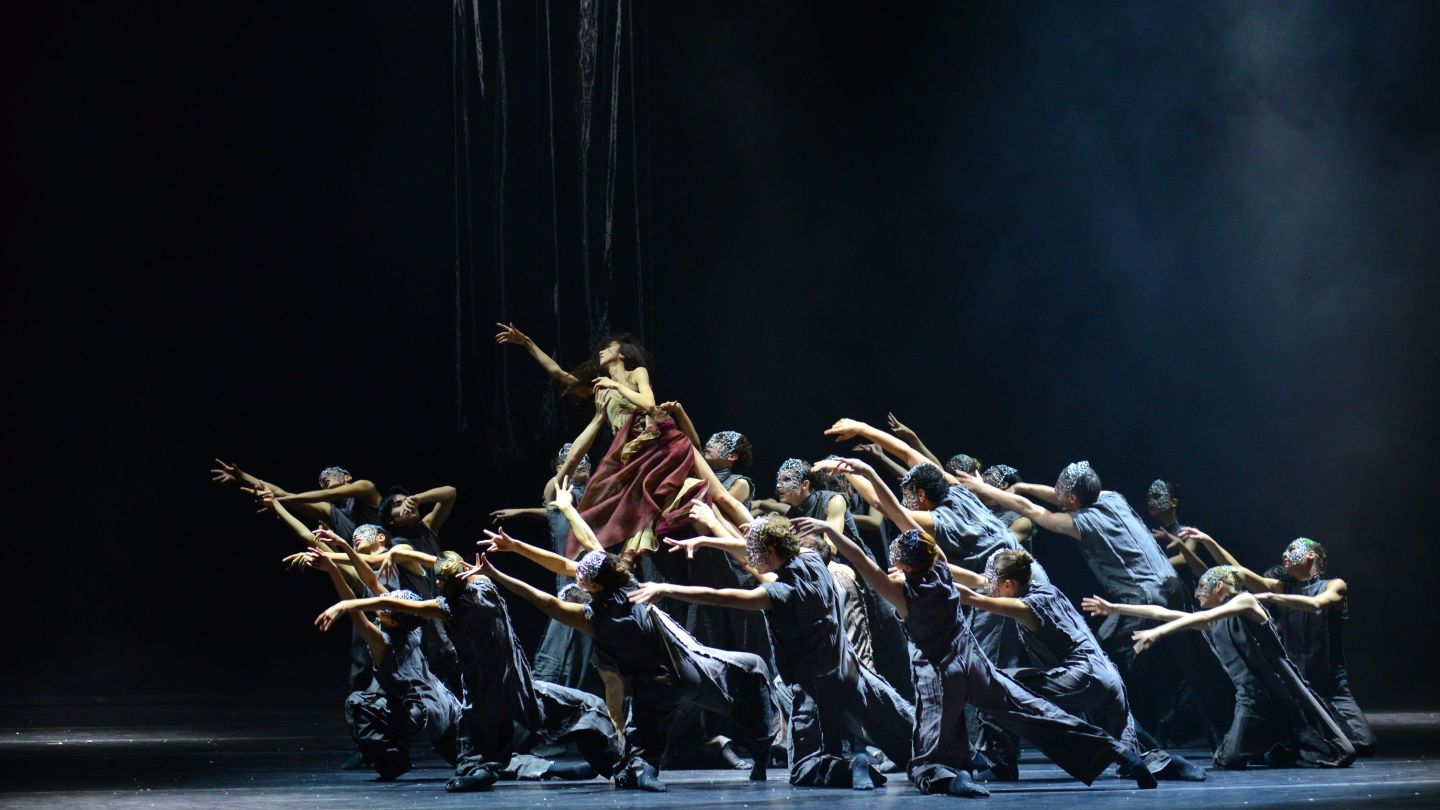
Hamlet is an emotionally dark and politically complex work. How did that inform your designs?
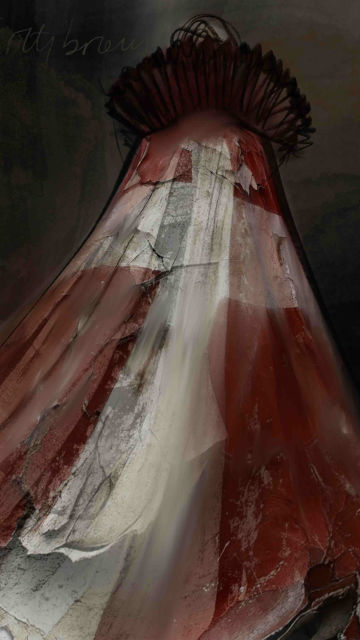
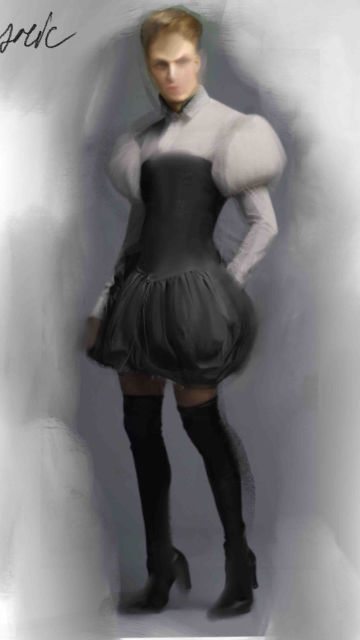
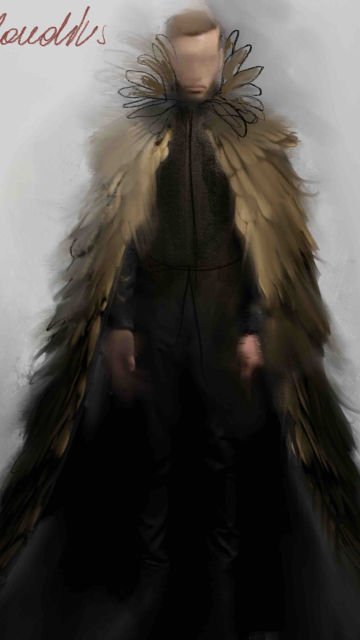
“Hamlet is an emotionally dark and politically layered work, and that complexity strongly shaped my costume approach. I wanted the costumes to reflect a world that is simultaneously elegant and decaying — a court built on appearances, repression and hidden tensions. The palette, silhouettes and textures all carry a sense of emotional weight. Rather than presenting purely historical costumes, I was interested in creating an atmosphere where power, grief, manipulation and isolation feel immediate and less concentrated in historical context.”
How has the choreography influenced your design and material choices?
“The choreography had a very direct influence on both the design and the choice of materials. Because movement in ballet communicates psychology as much as narrative, the costumes needed to support physical expression without restricting it. Fabrics were selected not only for their visual qualities, but also for how they behave in motion — how they flow, resist, collapse or catch the light. Certain characters required more structured silhouettes, while others needed softness and fluidity to enhance the emotional quality of the choreography.”
What was the process like creating the costumes, and approximately how long did it take to bring them all to life?
“The process was very intensive and highly collaborative. From the first sketches to the final fittings, the costumes evolved through continuous dialogue with the choreographer, dancers and costume workshop. Creating all the costumes involved research, conceptual development, sketching, sourcing fabrics, tailoring, dyeing, fittings and technical adjustments for movement. Altogether, the realization process took several months and required an extraordinary level of craftsmanship from the entire costume department.”
Are there any standout design elements or special features in the costumes that you think audiences should look out for? For instance, the dances wear masks in one section - what were you trying to convey with the use of masks?
One of the elements audiences may notice is the use of masks in certain dance sequences. The masks were primarily introduced to depersonalize the dancers, who in these moments represent Hamlet’s inner thoughts and psychological struggle rather than individual characters. I wanted the group to function almost as a moving manifestation of his inner dialogue — a collective presence that surrounds and accompanies him emotionally and mentally. The masks help erase individuality and strengthen the impression of a unified choreographic force, almost like thoughts taking physical form on stage.
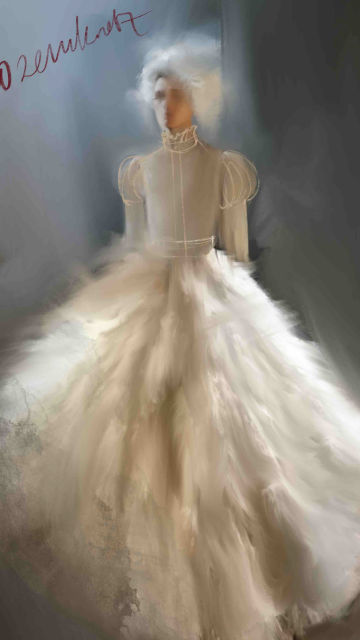
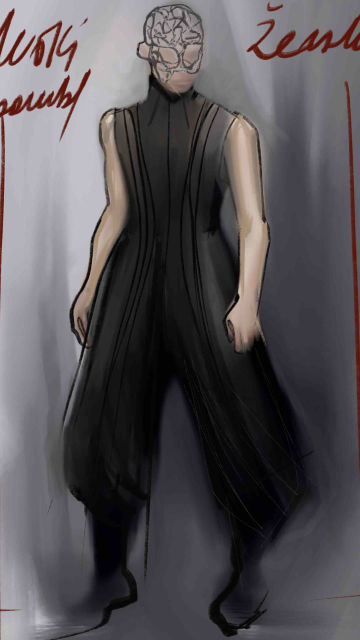
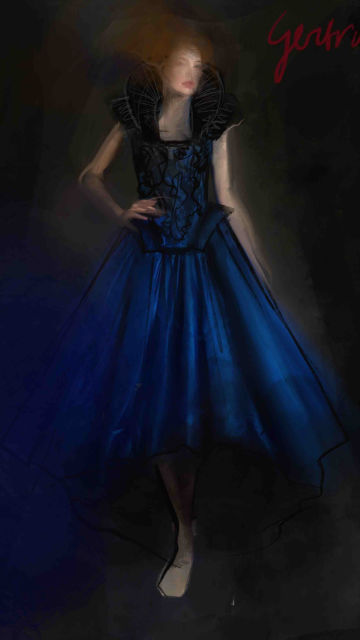
Did movement and choreography influence the materials or construction of the costumes?
“Absolutely. Movement and choreography were essential in determining not only the materials, but also the construction of the costumes. Ballet costumes must function almost like a second skin — they have to survive extreme physical demands while still maintaining their visual and dramatic integrity. Every seam, layer and fastening needed to support freedom of movement, speed and transformation on stage.”
How did you balance historical elements with a contemporary ballet aesthetic?
“I tried to avoid a purely historical reconstruction and instead focused on capturing the emotional essence of the period through a contemporary sensibility. Some silhouettes and references come from historical costume traditions, but they are simplified, abstracted or reinterpreted through modern lines and textures. This balance allowed the production to feel both connected to Shakespeare’s world and relevant to a contemporary audience.”
Do any characters have costumes that transform throughout the performance? What are the reasons for these changes and what do they reveal about the characters?
“Yes, several characters undergo costume transformations throughout the performance. These changes reflect psychological development, shifts in power and emotional disintegration. In some cases, costumes gradually lose structure or formality as the characters become more vulnerable or unstable. I wanted the audience to feel that the costumes evolve together with the inner lives of the characters, rather than remaining static visual representations.”
What do you hope that audiences will think or feel about Hamlet through your costumes?
“I hope audiences experience Hamlet not only as a historical tragedy, but as something deeply human and emotionally immediate. Through the costumes, I wanted to contribute to the atmosphere of fragility, tension and emotional exposure that runs through the entire production. Ideally, the visual world helps viewers enter the psychological space of the characters and feel both the beauty and the darkness of the story on a very personal level.”
Hamlet is running from the 19 June to 18 July 2026 at the Talbot Theatre, Thomas Dixon Centre.