About the music of Messa da Requiem
"If you want to spend an evening watching the best piece of drama, come and watch Queensland Ballet’s production of Messa da Requiem. It’s powerful, memorable and enthralling." - Roger Cui, Head of Music
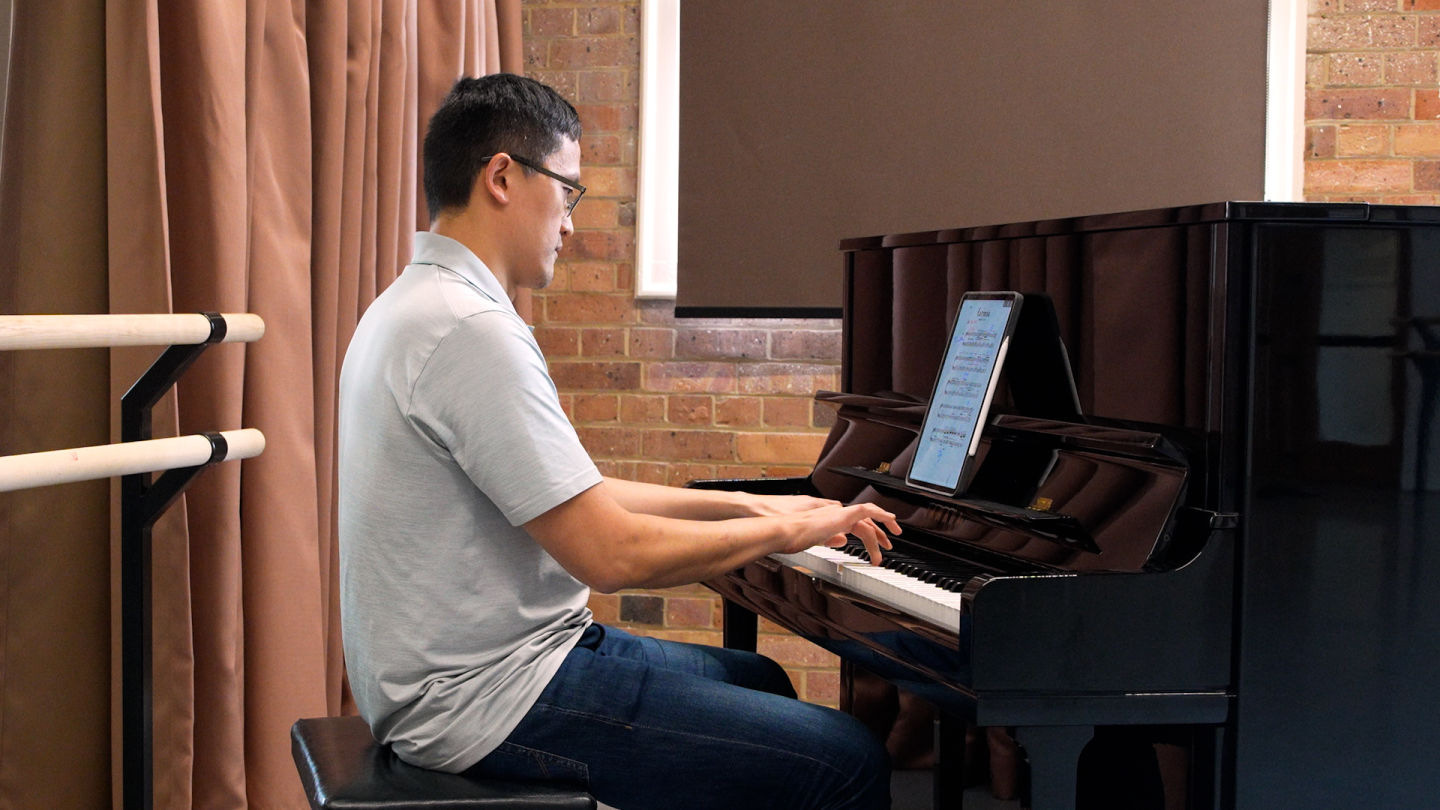
Head of Music, Roger Cui, explains Verdi’s intentions and inspiration when he was creating his epic score, Messa da Requiem.
In 1874, 152 years ago in Milan, Verdi debuted his monumental work, Messa da Requiem. What inspired him to create this extraordinary work?
Verdi composed the Requiem in memory of his dear friend, the poet Alessandro Manzoni. Unlike the restrained and liturgical style of many Requiems, Verdi’s Requiem is theatrical – or often described as an opera in sacred form.
Verdi’s rich orchestration and virtuosic choral writing runs the full gamut of emotions and features stark contrasts between tenderness and terror.
For example the Dies Irae has explosive drama and the Lacrimosa, Agnus Die have lyrical intimacy.
The score commences with the choir and orchestra whispering, Requiem Aeternam, it sounds like Verdi is inviting us into a magical, ethereal world. Can you share your thoughts on this beginning?
The opening line of Verdi’s Requiem reads Requiem Aeternam Dona eis, Domine, et lux perpetua luceat eis. It translates to Grant them eternal rest O Lord, and let perpetual light shine upon them. This is a common starting line of Requiems by many composers. Yet in Verdi’s case, the music accompanying this line of text creates a hushed tension before the explosive drama of Dies Irae.
One of the most recognisable and distinctive sections is the Dies Irae with its huge pounding timpani. What was Verdi communicating through this musical force?
Dies Irae is a medieval poem describing the Day of Judgement, a moment of terror, trembling and divine reckoning. What makes Verdi’s Dies Irae so powerful is the shock opening, the relentless rhythm, the spatial trumpets in the Tuba Mirum and the recurring Motif that returns several times throughout the Requiem, acting like a terrifying memory that won’t disappear.
It is theatrical, operatic, almost cinematic in scale. I believe Verdi was expressing our deep fear of the judgement.
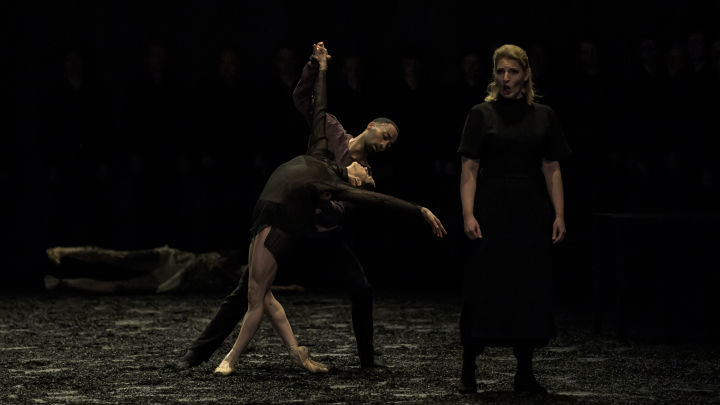
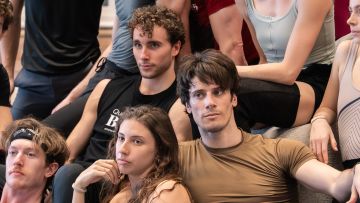
Artists of the Staatsballett Berlin as well as the Rundfunkchor Berlin in a Berlin production of Messa da Requiem. Photography: Sergei Gherciu.
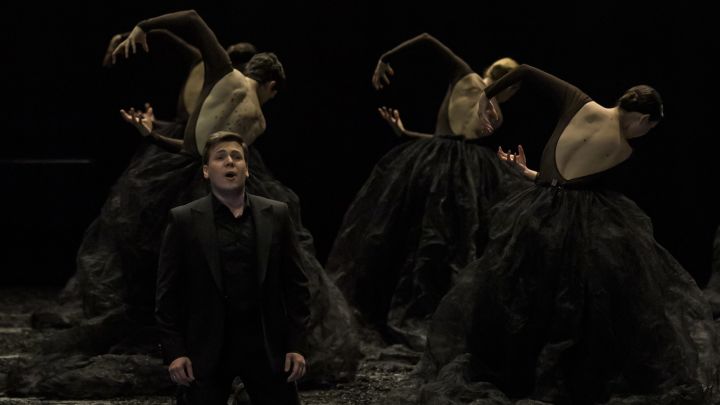
You have been in rehearsal with the dancers, how is this score translating into movement?
We are in the first week of rehearsing Messa da Requiem, and the dancers are still in the process of learning the choreography and perceiving Christian Spuck’s inspiration for this work. I have been studying the recordings from Zürich Staatstheater, who previously performed this work.
What strikes me is how powerfully expressive the choreography is in this work, which will certainly move the audience. Together with a full symphony orchestra playing in the pit, a large choir and four operatic soloists on stage, it is, without question, one of the most powerful balletic productions I have ever seen.
The word Requiem means ‘to rest,’ yet Verdi was more concerned with social justice than with the afterlife? Is this work more about heaven, or humanity?
Neither Heaven nor Humanity. I believe that whether you are a musician, a lawyer, a doctor, or a scientist we all have an innate desire to search for reasoning. In scientific terms that might be called knowledge, and in more sacred language, it could be described as the pursuit of Virtue.
Regardless of what words we use to describe Verdi’s musical inspiration, it is clear that he was writing with the loving memory of one of his dearest friends and someone who he deeply respected and regarded as the best Italian poet of his time.
We hear classical music everywhere, in movies, cartoons and commercials. Why do you think people still find it intimidating, and how accessible is it really?
I personally don’t find classical music intimidating at all. I also don’t define the differences between musical periods. Good music is simply good music.
Perhaps the perception of intimidation comes from the setting or the tradition surrounding it. Unlike a lot of pop music, which is often created primarily for entertainment, classical music often invites us to feel more deeply. It can move us, challenge us, and prompt reflection. It asks us to slow down.
In a world where everything is fast- fast food, fast travel, fast consumption, we’re not always encouraged to engage in experiences that require patience or emotional investment. Classical music can demand that of us.
As for accessibility, I believe it’s less about the music itself and more about openness. Classical music is everywhere in our daily lives. The real question is how willing we are to lean in, listen closely and allow ourselves to experience it.
If you had to sum up Messa da Requiem in a way that make someone buy a ticket, what would you say?
If you want to spend an evening watching the best piece of drama of your life unfold on the brand new stage of QPAC's state of the art theatre, the Glasshouse, come and watch Queensland Ballet’s first production of 2026, Messa da Requiem. It’s powerful, memorable and enthralling.
Messa da Requiem is running from the 27th March to the 4th April at the new Glasshouse Theatre, QPAC
Messa da Requiem is presented by Queensland Ballet in association with QPAC, and generous support from the Messa da Requiem Giving Circle.